
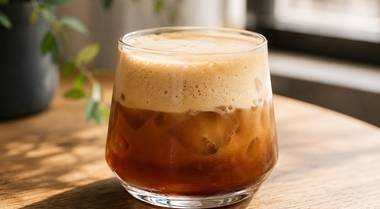
The first surprise is visual. A glass that appears to contain pale, creamy coffee arrives without milk, cream, or a theatrical cap of dairy foam. Beneath the tawny surface are chilled espresso, water, ice, and air. The drink is an Aerocano, and its transformation is less culinary sorcery than an elegant lesson in texture.
The name combines aeration with Americano, although recipes vary among cafes. At its simplest, an Aerocano begins with espresso diluted by cold water and chilled with ice. The mixture is then aerated, often with an espresso machine's steam wand, until it develops a fine foam. It tastes recognizably like black coffee, but its texture suggests something softer and more elaborate.
Espresso is already structurally complex. Pressurized brewing extracts soluble flavor compounds, disperses oils, and helps form crema from tiny gas bubbles. An Aerocano adds another layer of texture by distributing mechanically incorporated air throughout the diluted coffee. Those bubbles give the drink body without the addition of milk, sugar, or another ingredient.
Texture changes perception. A layer of tiny bubbles can make coffee seem rounder and less sharp because the liquid reaches the palate differently. Aeration also increases the coffee's exposed surface area, which can encourage aromatic compounds to escape as the foam forms and subsides. Because cold temperatures tend to mute aroma, aeration can help a chilled drink seem more expressive. Prolonged agitation, however, may allow those aromas to dissipate more quickly. This is a drink to make and enjoy, not leave brooding on a desk until noon.
The best foam comes from controlled agitation rather than brute force. Baristas generally combine espresso with cold water and ice, then position the steam wand to draw air into the liquid briefly. Because steam introduces heat, the process must be short and the ingredients thoroughly cold. Too much steaming melts the ice, increases dilution, and turns a crisp idea into tepid bathwater.
An Aerocano's foam is coffee foam. Cold foam is typically made by aerating cold milk or a non-dairy alternative separately, then spooning or pouring it over a drink. Depending on the product, its proteins, fats, carbohydrates, or stabilizers can produce a different texture and flavor. An Aerocano contains none of those unless a cafe deliberately changes the recipe.
A shaken espresso is a cousin, not a twin. Shaking espresso with ice chills and dilutes it rapidly while creating bubbles and temporary froth. The agitation is broader and more forceful, so the foam may be looser and less uniform. Some shaken espresso recipes also include syrup or milk, but those are recipe choices rather than requirements. The Aerocano's defining move is the finer aeration of diluted espresso.
Nor is it merely a latte in minimalist costume. A latte gains sweetness, opacity, and body from milk. An iced Americano is closer in composition, since both drinks use espresso and water, but an ordinary Americano is poured rather than intentionally aerated. Think of the Aerocano as the same cast under different direction: fewer solemn speeches, more Fred Astaire.
With no milk to soften the cup, the espresso must carry the entire performance. A balanced espresso roast is a natural starting point, offering sweetness, mild fruit character, and enough structure to remain distinct after dilution. Pull the shot with a recipe appropriate for your machine and coffee, then taste before adjusting the water. Extraction matters more than foam height. Aerating a harsh shot merely gives bitterness better upholstery.
Coffees with vivid aromatics can be especially engaging when chilled. The citrus, hibiscus, passion fruit, and ripe raspberry sensory notes of Limu Washed can create a bright, perfumed cup. These notes describe perceived flavors and aromas, not added ingredients. For a deeper profile, Bourbon Washed offers chocolate and sweet graham cracker characteristics, along with a heavier body that can stand up to dilution.
At home, begin with a chilled glass and enough ice to cool the espresso quickly. Add cold water conservatively, since melting ice contributes further dilution. Aerate the mixture only in a vessel designed for use with a steam wand. Keep the wand tip near the surface briefly to incorporate air, then submerge it slightly to refine the texture. Stop while the drink remains cold, and pour it over fresh ice if needed.
The Aerocano does not imitate dairy so much as reveal what air can do on its own. It lifts aroma, redraws texture, and turns espresso and water into something unexpectedly plush. The ingredient list is austere; the experience is not. On a crowded coffee menu, that restraint feels almost radical.